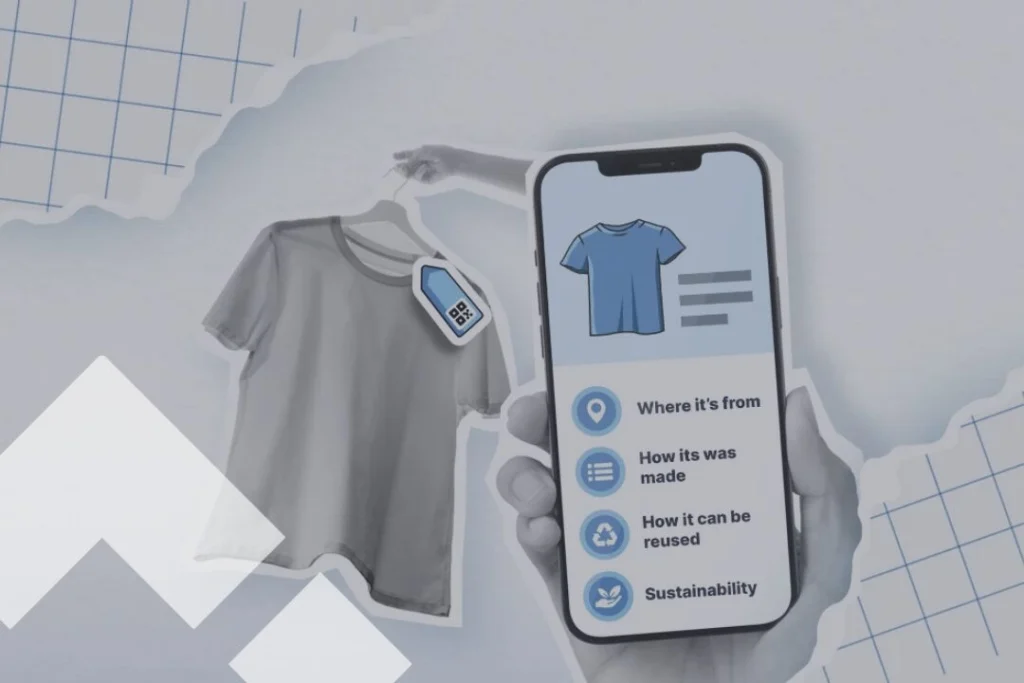
The Digital Product Passport (DPP) is emerging as one of the most important tools supporting the transition towards a more sustainable, transparent, and circular European economy. Designed to provide reliable, structured, and easily accessible information throughout a product’s lifecycle, the DPP will play a key role in helping businesses, consumers, and policymakers make more informed decisions.
Just as a personal passport contains essential information about an individual, a Digital Product Passport contains key data about a product. This may include information on material composition, origin, manufacturing processes, environmental performance, repairability, reuse potential, recyclability, and other characteristics that improve transparency and traceability across the value chain.
From Barcodes to Digital Product Passports
The use of digital identifiers is not new. For decades, barcodes have been used in retail, logistics, and supply chain management to identify products and facilitate inventory tracking. QR codes and other digital labels have also become common tools for providing consumers with additional product information.
The Digital Product Passport goes significantly further. Rather than serving as a voluntary communication tool, it is becoming part of a structured regulatory framework that defines both the technical requirements and the information that businesses will be expected to provide. As a result, companies will need to adapt to new standards of transparency, documentation, and compliance.
Why It Matters for the Textile Sector
The textile industry is at the centre of Europe’s transition towards a circular economy. Improving resource efficiency, reducing waste, increasing reuse, and enhancing recyclability all depend on access to reliable product information.
In the textile sector, Digital Product Passports can provide valuable data regarding fibre composition, material origin, manufacturing processes, environmental impacts, and end-of-life management options. This information can support better sorting, repair, reuse, and recycling practices while enabling more responsible production and consumption patterns.
At the same time, DPPs offer significant opportunities for businesses by strengthening product credibility, supporting sustainability claims, and helping companies differentiate themselves in an increasingly transparency-driven market.
TRUSTex and the Transition to Circular Textile Systems
The Horizon Europe project TRUSTex contributes to the development of innovative solutions for sustainable textile waste management across Europe.
The project focuses on designing and validating innovative Extended Producer Responsibility (EPR) models that support circularity, resource efficiency, and sustainable value chains within the textile sector.
The concept of the Digital Product Passport is closely linked to these objectives. Effective circular systems require accurate information, traceability, and access to data throughout the entire value chain. Without reliable product information, recycling, reuse, and responsible waste management become significantly more challenging.
By improving transparency and data accessibility, Digital Product Passports can become an essential enabler of circular textile ecosystems.
ena’s Contribution to TRUSTex
ena Development Consultants actively participates in TRUSTex as a project partner, contributing to several strategic activities that support the long-term impact and uptake of project results.
In particular, ena is involved in market and consumer trends analysis, assessing current challenges, opportunities, and future developments within the textile sector. The company also contributes to the project's exploitation strategy, helping ensure that the solutions and tools developed within TRUSTex can generate tangible value for industry, policymakers, and society.
Towards a More Transparent and Sustainable Future
The Digital Product Passport is much more than a new digital tool. It represents a new way of designing, documenting, managing, and communicating product information throughout the lifecycle of a product.
For the textile industry, this transition offers an important opportunity to improve transparency, optimise resource use, reduce waste, and strengthen the adoption of circular economy principles.
Through its participation in TRUSTex, ena Development Consultants contributes to this transformation by supporting innovative solutions that promote sustainability, transparency, and responsible growth within the European textile ecosystem.